
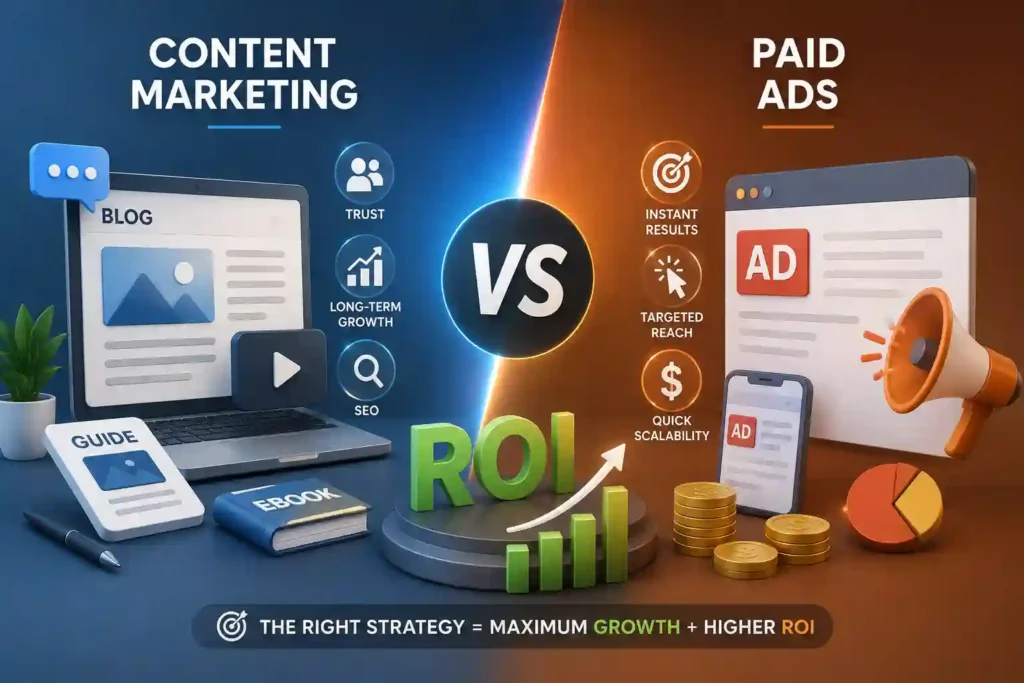
One of the most common questions growing businesses ask is: should we invest in content marketing or paid advertising? The honest answer is that it’s not really an either/or decision — but understanding how each works, and when to lean on one more than the other, can help you get better returns from your marketing budget.
How Content Marketing ROI Compounds Over Time
Content marketing — blog posts, guides, videos, and SEO-optimized pages — works like a long-term investment. A well-written blog post can continue driving organic traffic, leads, and sales for years after it’s published, without ongoing spend. The tradeoff is patience: content marketing typically takes three to six months (or longer) to show meaningful results.
How Paid Ads Deliver Speed But Require Ongoing Spend
Paid advertising — Google Ads, Meta Ads, LinkedIn Ads — can generate traffic and leads almost immediately. The catch is that results stop the moment you stop paying. There’s no compounding asset being built; you’re renting attention rather than owning it.
Cost Comparison: A Real-World Scenario
Imagine a business investing $2,000/month for six months in each channel:
- Paid ads: Likely to generate a steady, predictable stream of leads during the six months, but traffic drops to near zero once spend stops.
- Content marketing: May generate fewer leads in month one or two, but by month six, organic traffic often continues growing — and that same content keeps working in month twelve, eighteen, and beyond.
When to Prioritize One Over the Other
- New businesses needing immediate revenue: Paid ads are often necessary to generate early traction while content builds momentum.
- Established businesses looking for long-term efficiency: Content marketing typically offers a lower cost-per-lead over time.
- Competitive, high-intent keywords: A blend of both — using ads to capture immediate demand while content builds authority — is usually most effective.
Why the Best Strategy Combines Both
The businesses that grow most efficiently rarely choose one channel exclusively. A common, effective approach:
- Use paid ads to validate messaging and offers quickly.
- Feed high-performing ad messaging into long-form content and SEO pages.
- Use content to nurture and retarget audiences who aren’t ready to buy from an ad alone.
- Gradually shift budget toward content as organic traffic grows, using ads for promotions and time-sensitive offers.
The Bottom Line
Paid ads and content marketing solve different problems. Ads buy you speed; content builds a durable asset. The smartest businesses use both together, adjusting the mix as their organic presence matures.
Not sure how to split your budget? Get a free marketing ROI assessment tailored to your business stage and goals.