
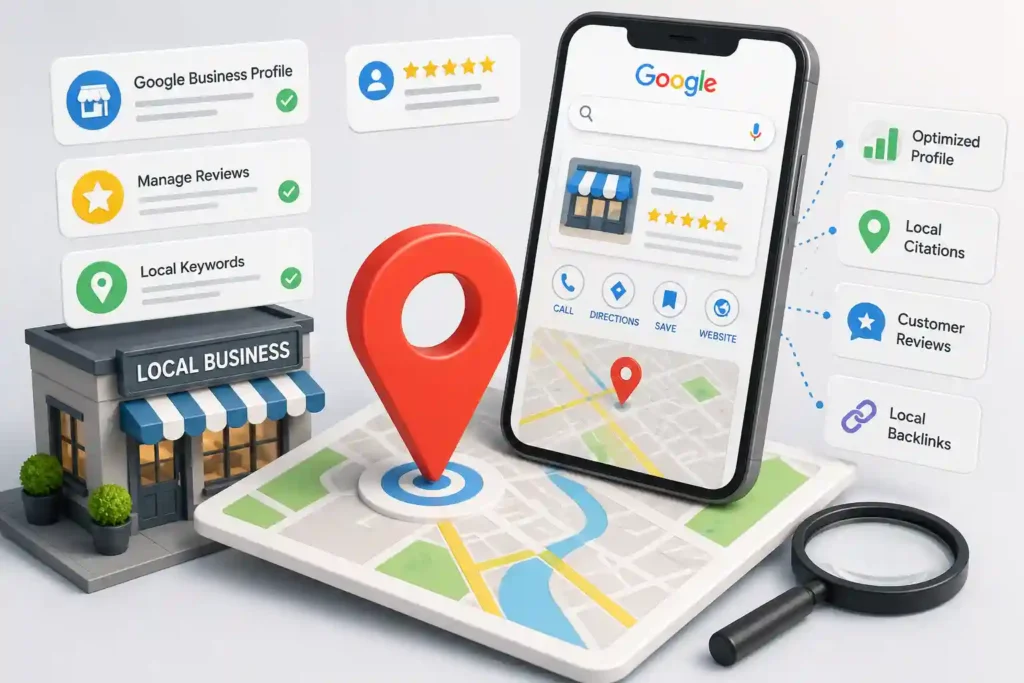
If your business serves a specific city or region, local SEO is one of the highest-return investments you can make. Unlike broad SEO, which competes nationally or globally, local SEO helps you show up exactly when nearby customers are searching for what you offer — often with strong buying intent. Here’s how to make sure your business gets found on Google Maps and local search results.
Why Local SEO Matters
Most local searches happen with intent to visit or contact a business within 24 hours. Ranking well in the local map pack (the top three business listings shown with a map) can dramatically increase calls, foot traffic, and bookings without spending a cent on ads.
Setting Up and Optimizing Your Google Business Profile
Your Google Business Profile (formerly Google My Business) is the foundation of local SEO. Make sure to:
- Claim and verify your listing
- Choose accurate primary and secondary business categories
- Add complete business hours, phone number, and website
- Upload high-quality photos regularly
- Post updates, offers, and events through the profile
Local Keyword Research
Think beyond generic keywords. Combine your service with your location:
- “plumber in [city]”
- “best coffee shop near [neighborhood]”
- “[service] + [city] + emergency”
Use tools like Google Keyword Planner or Ubersuggest to find local search volume, and weave these naturally into your website copy, service pages, and blog content.
Building Local Citations and Consistent NAP Data
NAP stands for Name, Address, Phone number. Inconsistent NAP data across directories (Yelp, Bing Places, industry-specific directories) confuses search engines and hurts rankings. Audit your listings regularly and correct any discrepancies.
Getting and Managing Customer Reviews
Reviews are a major local ranking factor and a trust signal for potential customers. Best practices:
- Ask satisfied customers directly for reviews
- Respond to all reviews, positive and negative, professionally
- Never buy or fake reviews — this can get your listing suspended
On-Page Local SEO
- Create dedicated location pages if you serve multiple areas
- Add local business schema markup to your website
- Include your city/region naturally in title tags, headers, and meta descriptions
- Embed a Google Map on your contact page
Bringing It All Together
Local SEO isn’t a one-time setup — it’s an ongoing process of maintaining accurate information, earning reviews, and creating locally relevant content. Businesses that stay consistent typically see steady, compounding gains in visibility and foot traffic over time.
Want to know where your local SEO stands today? Request a free local SEO audit to see exactly what’s holding your rankings back.