
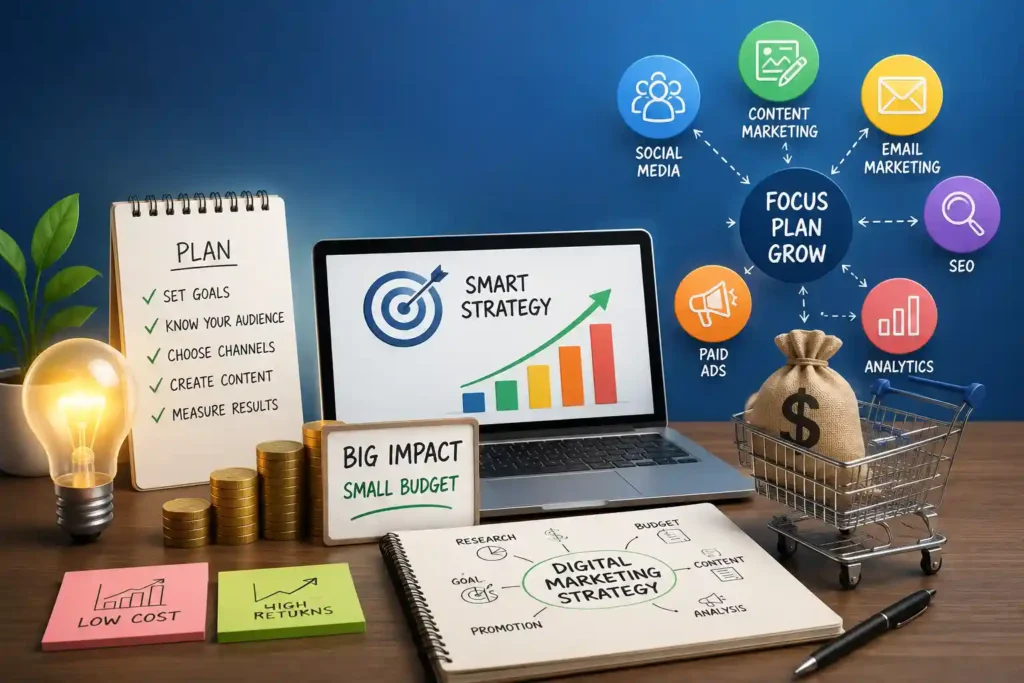
You don’t need a massive budget to build a marketing strategy that actually works. What you need is clarity on priorities, a willingness to focus on a few channels instead of spreading thin, and consistency over time. Here’s how to build an effective digital marketing plan even with limited resources.
Set Realistic, Measurable Goals First
Before choosing channels or tactics, define what success looks like: more website traffic, more leads, more repeat customers? Vague goals lead to scattered efforts. Specific, measurable goals help you know where to focus your limited budget.
Free and Low-Cost Channels Worth Prioritizing
- SEO: Optimizing your website and creating helpful blog content costs time more than money, and pays off long-term.
- Organic social media: Consistent, authentic posting can build an audience without ad spend.
- Email marketing: Extremely cost-effective for nurturing existing leads and customers.
- Google Business Profile: Free to set up and manage, and critical for local visibility.
When and How to Test Small Paid Budgets
Once your free channels are in motion, test paid ads with a small, controlled budget:
- Start with $5-10/day on a single platform
- Test one offer and one audience at a time
- Track cost-per-lead closely before scaling spend
DIY vs. Outsourcing: What to Hand Off First
If you’re managing everything yourself, consider outsourcing the tasks that are most time-consuming or require specialized skill first — often content writing, graphic design, or ad management — while keeping strategy and customer relationships in-house.
Sample 3-Month Budget-Friendly Marketing Plan
Month 1: Optimize Google Business Profile, set up email list capture, publish 2 SEO-focused blog posts.
Month 2: Launch a consistent social media posting schedule, set up a welcome email automation, test a small paid ad campaign.
Month 3: Analyze what’s working, double down on the highest-performing channel, publish 2 more blog posts targeting customer questions.
The Bottom Line
A small budget doesn’t mean small results. The businesses that grow steadily on limited resources are the ones that stay focused, track what’s working, and reinvest in the channels that prove effective — rather than trying to do everything at once.
Need help prioritizing your next 90 days of marketing? Download our free budget-friendly marketing planning template.