
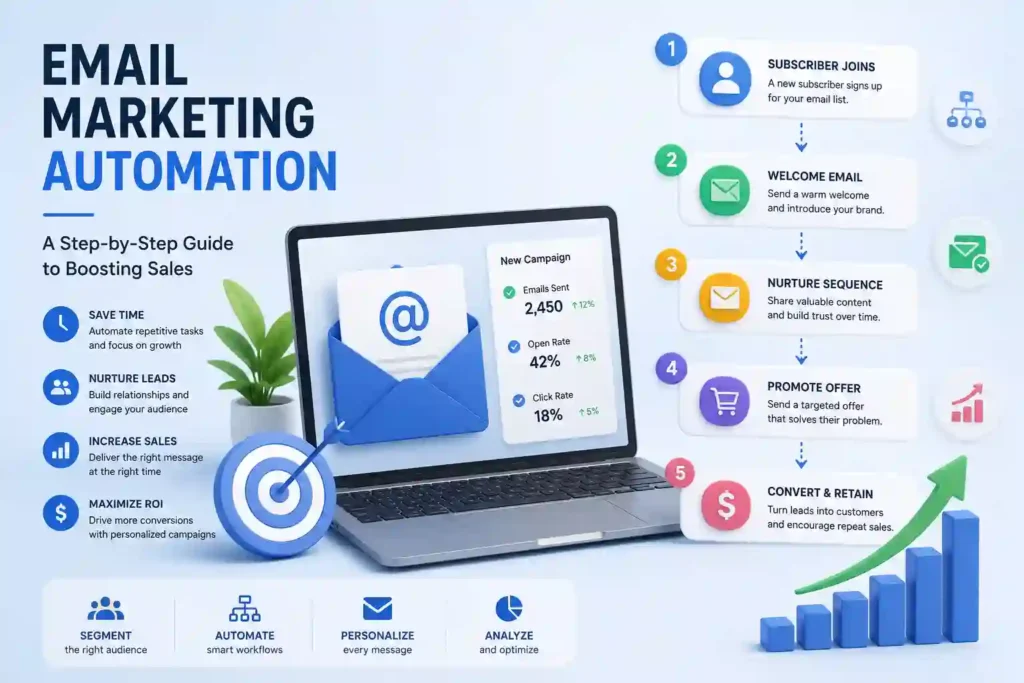
Despite the rise of social media and paid ads, email marketing remains one of the highest-ROI channels available to businesses of any size. The key to making it work isn’t sending more emails — it’s automating the right ones at the right time. Here’s a step-by-step guide to building an email automation system that drives real sales.
Why Email Still Outperforms Most Channels
Email marketing consistently delivers a strong return because it reaches people who have already opted in — meaning they’re already interested in your business. Unlike social media, you’re not competing with an algorithm to reach your own audience.
Step 1: Build Your Email List the Right Way
Focus on quality over quantity. Effective list-building tactics include:
- Offering a valuable lead magnet (guide, discount, checklist)
- Adding signup forms at key points on your website
- Using pop-ups sparingly and only with clear value propositions
Avoid purchased lists — they hurt deliverability and rarely convert.
Step 2: Set Up Key Automated Flows
These core automations do the heavy lifting:
- Welcome series: Introduces new subscribers to your brand and best offers.
- Abandoned cart emails: Recovers lost sales by reminding customers what they left behind, often with a gentle incentive.
- Re-engagement campaigns: Wins back subscribers who haven’t opened emails in a while.
- Post-purchase follow-ups: Encourages reviews, repeat purchases, and referrals.
Step 3: Segment and Personalize
Not every subscriber should get the same email. Segment your list by:
- Purchase history
- Engagement level (active vs. inactive)
- Interests or browsing behavior
Personalized subject lines and content based on these segments consistently outperform generic blasts.
Step 4: Choose the Right Tool
- Mailchimp: Great for beginners and small lists
- Klaviyo: Strong choice for ecommerce with advanced segmentation
- ActiveCampaign: Good middle ground with robust automation and CRM features
Step 5: Track the Metrics That Matter
Focus on:
- Open rate (subject line effectiveness)
- Click-through rate (content and offer relevance)
- Conversion rate (actual sales driven)
- Unsubscribe rate (list health)
The Bottom Line
Email automation lets you nurture leads and recover sales around the clock without manual effort. Businesses that set up even the basic flows — welcome, abandoned cart, and re-engagement — typically see a meaningful lift in revenue within the first few months.
Want a ready-to-use automation blueprint? Grab our free email automation template to set up your first flows this week.